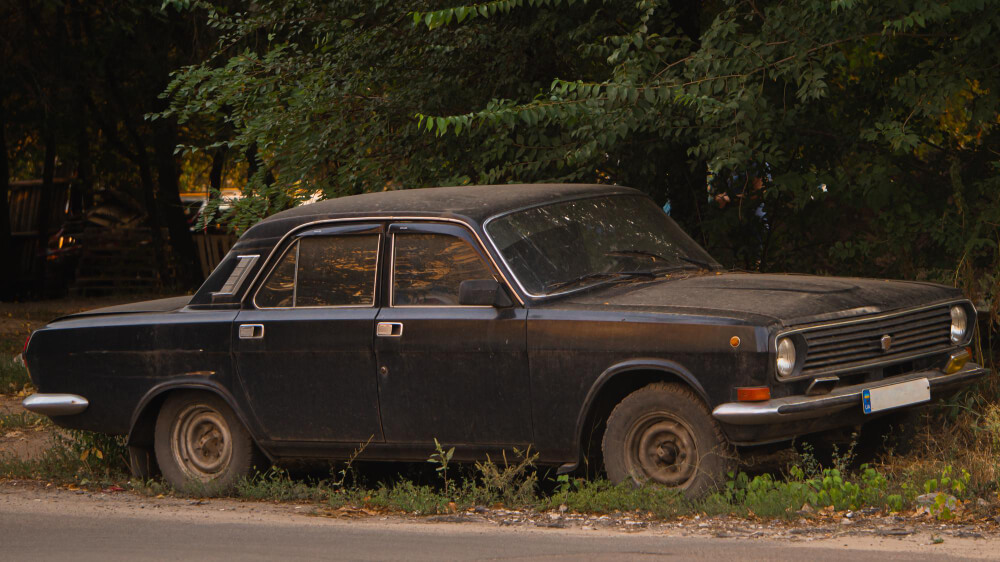
That car sitting in your driveway, the one you keep saying you will deal with eventually, might be worth more as junk than as a vehicle. Or it might still have some life in it. Either way, the first step is knowing where it actually stands. Understanding what qualifies as a junk car can help you make a clear, confident decision and skip the guesswork entirely.
A junk car is broadly defined as any vehicle that is no longer roadworthy, has little to no resale value as a functioning vehicle, and is worth more in parts or scrap metal than it is as a complete, working unit.
There is no single universal legal definition that applies in every state. In Florida, the state formally distinguishes between junk vehicles and salvage vehicles for titling and registration purposes. A junk vehicle in Florida is generally one that is inoperable, stripped, or not intended to be repaired or returned to the road. A salvage title is issued when a vehicle has been declared a total loss by an insurance company following an accident, flood, or other major damage event.
For most everyday purposes, the working definition is simple. If the car is no longer worth fixing and no private buyer would pay a reasonable price for it, it qualifies as a junk car.
Not every junk car looks the part. Some are visibly deteriorated, while others look fairly normal on the outside but carry serious mechanical problems underneath.
A vehicle that does not run and requires costly repairs to get back on the road is one of the clearest examples. If the engine or transmission has failed and a replacement costs several thousand dollars, the math rarely works in favor of fixing it. Frame or structural damage from a collision or years of rust is another strong indicator, since structural repairs are often prohibitively expensive and can compromise the vehicle’s long-term integrity even after the work is done.
Flood or fire damage falls into the same category. These events affect not just the visible surfaces but the mechanical systems, the wiring, and the overall structure of the vehicle in ways that are difficult and expensive to fully address. A car that has been sitting unused for a long period of time often develops compounding problems including seized brakes, degraded rubber components, battery failure, and fuel system issues, which can make getting it road-ready again more trouble than it is worth. Severe cosmetic damage, including extensive rust or body panel deterioration, can also bring resale value so low that junking becomes the more practical route.
One of the clearest ways to identify a junk car is to compare the estimated repair cost against the vehicle’s current market value. A widely used rule of thumb in the automotive world is this: if the cost of a single needed repair exceeds 50 percent of the vehicle’s current market value, the car is generally not worth fixing.
Here is a practical example. Say your car’s current market value is $2,000 and you receive an estimate for a transmission replacement at $1,800. Even if the repair is done correctly, you are investing nearly the full value of the car into a single fix, with no guarantee that something else will not fail shortly after.
That is the compounding problem with older, high-mileage vehicles. When one major system starts to go, others tend to follow. A single large repair estimate often signals the beginning of a longer and more expensive pattern rather than a one-time setback.
To find your vehicle’s current market value, tools like Kelley Blue Book and NADA Guides offer free estimates based on the year, make, model, mileage, and condition of your vehicle. Running those numbers before making a decision gives you a clear, factual baseline to work from rather than relying on guesswork.
This is one of the most common misconceptions about junk cars, and it is worth clearing up directly. A vehicle does not have to be completely inoperable to qualify as junk.
A running car can still fall into junk territory in several situations:
If your car starts but a reasonable person would not pay meaningful money for it, it is fair to consider it a junk vehicle.
A lot of people delay making a decision about a junk car because doing nothing feels easier. In reality, holding onto a junk vehicle comes with ongoing costs that add up quietly over time.
In Florida, annual registration renewal fees apply to any vehicle with an active tag. If you are not driving the car, you may still be paying those fees each year with nothing to show for it. Insurance is another factor. Many owners continue paying for at least minimal coverage on an unused vehicle, which is money spent on something that provides no practical benefit.
If you live in an HOA community, an inoperable vehicle parked in plain view can result in formal warnings and fines that accumulate quickly. Some municipalities also have local ordinances that apply to non-running vehicles stored outside on residential property.
There is also the matter of scrap value declining over time. As a vehicle continues to sit and deteriorate, the components that contribute to its junk value, including usable metal, the catalytic converter, and other salvageable parts, degrade further. Acting sooner rather than later generally means a better payout.
Figuring out what qualifies as a junk car does not require a mechanical background or a formal appraisal. In most cases, the answer becomes clear once you compare repair costs against the vehicle’s actual market value, take an honest look at its condition, and consider what holding onto it is costing you month after month.
Many Tampa Bay drivers find themselves in this exact situation, and the process of letting go is far simpler than it looks from the outside. If you are ready to take that next step, Big League Towing Company is here to help. Reach us at (813) 384-8840 and we will take it from there.