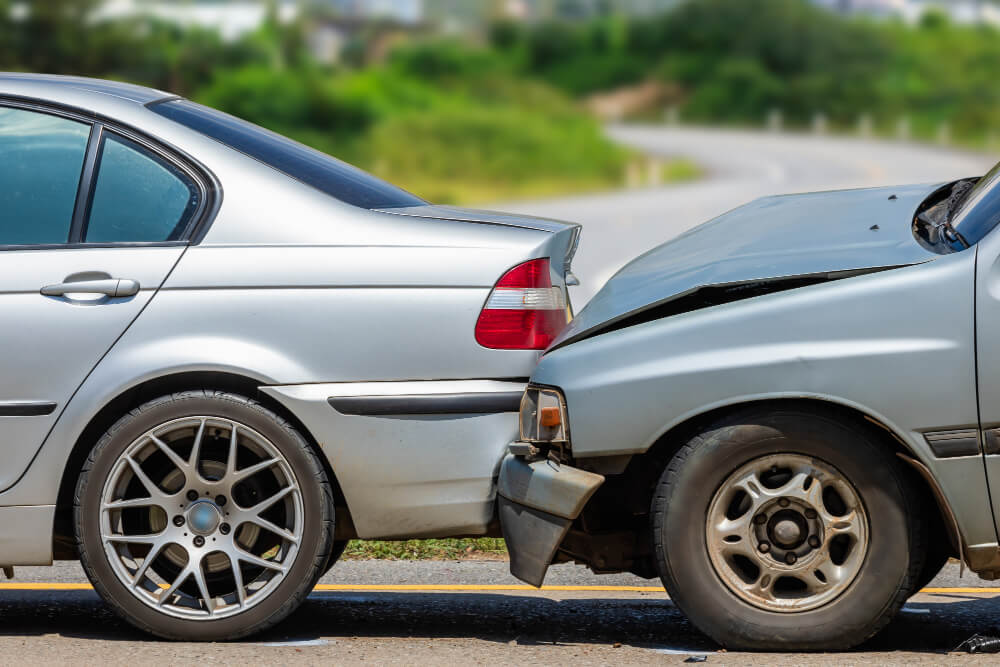
Avoiding rear-end collisions in stop-and-go traffic comes down to three habits you can start using on your very next drive: leave a time-based gap you can actually brake within, look farther ahead than the car in front of you so you can react early, and brake smoothly and predictably so the drivers behind you have time to respond. Those simple changes prevent most “I never even saw it coming” moments that lead to fender benders, injuries, and disabled vehicles on the side of the road. And if a collision still happens and your car can’t be driven safely, Big League Towing Company can help with next steps in the Tampa Bay area at (813) 384-8840.
Rear-end crashes usually happen when traffic compresses quickly and one driver is surprised. You can’t control sudden slowdowns, but you can control how much time you have to deal with them. A bigger buffer zone feels like you’re “letting people in,” but it’s really buying reaction time. In heavy traffic, that time matters more than your exact position in line.
Start by shifting your attention from the bumper in front of you to the flow of traffic several vehicles ahead. When you can see brake lights rippling through the pack early, you can ease off the accelerator before you ever need to brake hard. That one change keeps your speed more stable, reduces panic stops, and makes you more predictable to drivers behind you.
Finally, keep an escape option in mind. You do not need to weave or change lanes constantly. Just avoid boxing yourself in when you can, especially near large trucks or in lanes with frequent merging. A little lateral space and a bit of extra following time can turn an unavoidable impact into a near-miss.
Car-length rules break down because “three car lengths” at 15 mph is very different from three car lengths at 45 mph. A time gap works at any speed and is easy to use without math.
Pick a fixed point ahead, like a signpost or a shadow line. When the car in front passes it, count seconds until you pass it. In stop-and-go conditions, aim for a gap that lets you brake gently when things tighten up, not a gap that forces you to react at the last moment. If you’re driving in heavy rain, on slick roads, at night with glare, or behind a vehicle that blocks your view, give yourself more time than you would on a clear day. The right gap is the one that keeps you out of “slam the brakes” territory when traffic changes.
A practical way to think about it is this: if you are routinely forced into hard braking, the gap is too small for the conditions, even if it feels normal compared to everyone else.
In congested traffic, people will merge into any open space. Treat that as a predictable event, not a personal challenge. When someone cuts in, ease off and rebuild the time gap rather than closing in to “teach a lesson” or protect your spot.
If you close the gap aggressively, you create a chain reaction behind you. The next driver brakes harder, the next driver brakes harder again, and you get the accordion effect that makes traffic feel dangerous. By calmly adding the space back, you smooth out the speed changes for everyone around you, including the driver who might otherwise hit you from behind.
You want your foot ready, but you don’t want to confuse the drivers behind you. Covering the brake means hovering your foot close enough to respond quickly when traffic compresses. Riding the brake means dragging it lightly while still moving, which can keep your brake lights on and train other drivers to ignore them.
In slow traffic, it’s better to use gentle, deliberate braking in clear pulses than to coast with the brake lights constantly glowing. That way, when you do brake, it communicates something meaningful to the driver behind you.
The “late brake” trap happens when you stay on the gas a bit too long because traffic looks like it’s still moving, then you suddenly realize it isn’t. The fix is simple: when you see brake lights two or three cars up, treat it as your cue to lift off the accelerator early. Often, that early lift is enough to reduce speed without even touching the brake, or it allows you to brake lightly instead of hard.
Light early braking also serves as a warning to the driver behind you. Your brake lights come on sooner, they get more time to react, and you reduce the chance of being hit from behind while you’re trying not to hit the car in front.
Stop-and-go traffic feels different on slopes because speed creeps up with almost no effort, and following gaps shrink faster than you realize. On a downhill approach to stopped traffic, add extra space early and brake sooner than your instincts might suggest.
Bridges can create similar issues. Visibility changes, lanes narrow, and drivers often bunch up. If you know a bottleneck is coming, start leaving that gap before you reach it, not after you’re already in the squeeze.
Most rear-end collisions are not caused by a driver who “can’t brake.” They happen because the driver doesn’t notice the slowdown until it’s late. The most common attention mistake in stop-and-go traffic is staring at the car directly ahead as if it’s the only source of information. When you fixate that close, you lose the early warning signals farther up the line.
Train yourself to scan: far ahead through windows when you can, then mirrors, then back to the road. In heavy traffic, checking mirrors every few seconds is not paranoid. It’s how you catch a tailgater early and adjust your driving before it becomes an emergency.
Distractions turn a manageable slowdown into a crash. Phone notifications, infotainment screens, eating, or even intense conversations matter more in stop-and-go conditions because the situation changes every few seconds. If you’re tired, stressed, or running late, you’re also more likely to drive too close and brake too late. Those are exactly the conditions where giving yourself more space makes the biggest difference.
You can do everything right and still slide if your tires can’t grip. In stop-and-go traffic, traction matters most in sudden compressions and on wet roads where hydroplaning or reduced grip can extend stopping distance.
Check tire pressure regularly, especially when temperatures swing. Underinflation and overinflation both reduce braking effectiveness in different ways, and they can make the car feel less stable during quick speed changes. Also pay attention to tread depth and uneven wear. If the tread is getting low or the wear is uneven, stopping distances can increase and the car can behave unpredictably during hard braking.
Brake condition matters too. If you’ve noticed squealing, grinding, a mushy pedal, or vibration while braking, get it inspected. Stop-and-go traffic is hard on brakes, and small issues can become big ones quickly.
Rear-end collisions are about impact management as much as crash avoidance. Make sure your headrest is positioned high enough to support the back of your head, not your neck. Proper headrest positioning reduces the risk of whiplash if you’re hit from behind.
Also make sure your brake lights work and your windows are clean. It sounds basic, but dirty glass and foggy windows shorten the distance you can see ahead, and burned-out lights reduce your ability to communicate with drivers behind you.
Forward collision warning and automatic emergency braking can help, but they’re not a substitute for space and attention. These systems can be limited by heavy rain, sun glare, sensor blockage, and abrupt cut-ins. Adaptive cruise control can be useful in light traffic, but in dense stop-and-go it may brake and accelerate in ways that feel late or awkward, especially when drivers merge into your lane.
If your vehicle has driver assistance, use it as a backup. Continue driving as if it might not activate at the moment you expect. Leaving a reasonable time gap is still the foundation.
When someone is following too closely, the safest move is usually to create more space in front of you, not less. That extra space gives you room to brake gradually instead of abruptly, which lowers the chance the tailgater hits you if traffic stops.
Avoid brake-checking or sudden speed changes. Those escalate the situation and can make you partially responsible if a crash happens. If you have an easy opportunity to change lanes and let them pass, take it when it’s safe. If you can’t, focus on smooth driving and predictable braking. A steady driver is easier to avoid than a reactive one.
Some rear-end crashes happen in predictable places where drivers get surprised.
A common one is a sudden stop after a bend or over a crest where you can’t see the backup until the last second. In those areas, it helps to slow slightly earlier and increase the time gap even if the lane is moving. Another is the “phantom jam” where traffic slows for no obvious reason because people are rubbernecking or changing lanes. If you see heads turning or brake lights flaring near an incident, assume the slowdown will be sharper than it looks.
Merges and construction zones are also prime rear-end territory. Drivers are watching cones, signs, and lane shifts while simultaneously trying to merge. In these areas, be generous with space, signal early, and expect last-second moves from other drivers. If you drive a little smoother than the flow, you give yourself time to deal with someone else’s mistake without making your own.
If you’re closing in too fast, strong, controlled braking in a straight line is usually safer than swerving. Swerving can trade a rear-end collision for a side-swipe, a rollover risk, or hitting a barrier or another vehicle in an adjacent lane. Keep both hands on the wheel, brake firmly, and stay in your lane unless you have a truly clear, safe escape path.
If you’re being tailgated and traffic stops hard, using your brake lights early helps the driver behind you. In some situations, tapping the brake lightly before you fully slow can signal the driver behind you sooner, then you can brake more firmly as needed. Use your horn if it might alert a distracted driver and avoid a hit, but keep your focus on maintaining control.
After any impact, prioritize moving to a safer location if the vehicle can be moved and it’s legal to do so. Turn on hazards, check for injuries, and call emergency services if anyone is hurt. If your vehicle is leaking fluids, the steering feels wrong, airbags deployed, or a wheel is damaged, it may not be safe to drive even a short distance. That’s where a professional tow becomes the practical next step rather than trying to limp it home.
A few repeatable habits make rear-end collisions much less likely, even when you’re tired and traffic is frustrating.
Leave a time-based gap that prevents panic braking, and rebuild it calmly when it gets cut off. Look several cars ahead so you’re reacting to the flow, not surprises. Brake early and smoothly so the drivers behind you get the message in time. Check mirrors often enough to know what’s happening behind you, especially if someone is following too closely. And when conditions worsen rain, glare, night driving, heavy trucks make your world smaller, increase the gap to compensate.
Rear-end collisions in stop-and-go traffic become much less likely when you drive with a real time gap, scan ahead for early warning, and brake in a smooth, predictable way that helps both you and the drivers behind you. If a crash still happens and your vehicle isn’t safe to drive, getting it moved off the road quickly can prevent a second collision and reduce stress during an already difficult moment. For help in the Tampa Bay area after an incident, you can reach Big League Towing Company at (813) 384-8840 to arrange assistance when you need it.