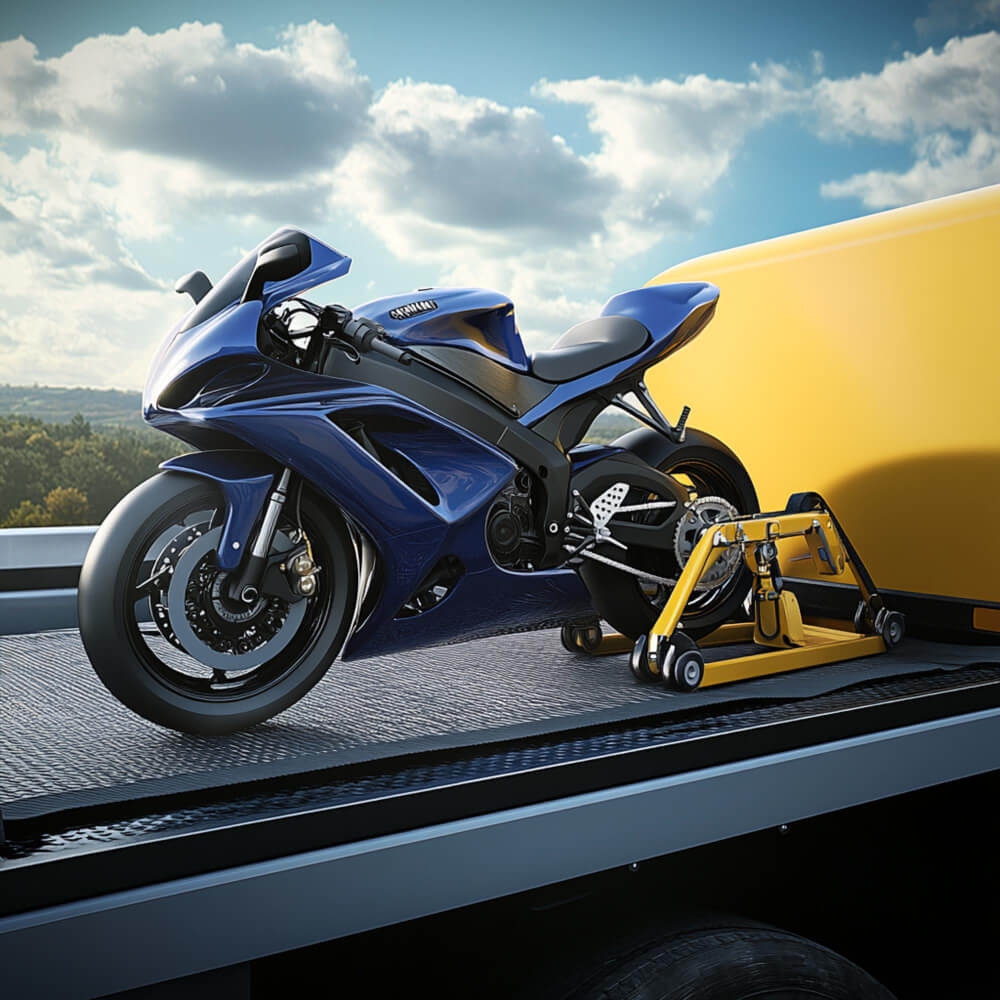
Your bike breaks down on the side of the road and a friend with a pickup offers to help. It sounds simple. Why call for a tow when someone you trust is already on the way? That reasoning is completely understandable, and sometimes it works out fine. But towing a motorcycle with a truck is one of those tasks that looks easier than it is, and the mistakes that happen along the way can cause damage that costs far more to fix than a professional tow ever would.
This article walks through what the job actually requires, where things tend to go wrong, and how to recognize when calling a professional is the smarter move. If you are in the Tampa Bay area and need help with motorcycle towing, Big League Towing Company is available at (813) 384-8840. Otherwise, this is worth reading before you ever find yourself in that situation.
The reasons make sense. Calling a tow service costs money, a friend with a truck is already nearby, and handing your bike to a stranger feels uncomfortable when you have put real time and money into it. Some riders also assume that if towing a car works fine, a motorcycle should be even easier since it weighs less.
That last assumption is usually where the trouble starts. A motorcycle is lighter, yes, but it is also narrower, top-heavy, and far less stable on a trailer than a four-wheeled vehicle. Those differences matter a lot once the truck starts moving down the road.
Towing a motorcycle with a truck safely is not just a matter of having a truck and a few straps. Done correctly, it calls for specific equipment that most people do not have sitting in their garage.
Here is what a proper DIY motorcycle tow setup actually needs:
If any of these pieces are missing, the chance of damage during transport increases significantly.
This is where most DIY tows run into trouble. The mistakes are rarely dramatic. They are usually small oversights that only become obvious once the bike arrives with new scratches or a mechanical issue that was not there before.
These are the most frequent errors:
Scratched paint, cracked fairings, and scuffed chrome are among the most common outcomes of a poorly executed tow. This kind of damage is especially frustrating because it has nothing to do with the original breakdown. A strap in the wrong spot or a hook that shifts during transport is all it takes.
This is where it gets more expensive. Fork seals can be compromised by excessive strap tension on the front end. Suspension components can be stressed by repeated bouncing without a proper chock holding things in place. Some of this damage is not immediately visible. A fork seal leak, for example, might not become noticeable until a few rides later when oil shows up on the lower leg.
An improperly secured motorcycle can shift during transport. In a best-case scenario, the bike tips over on the trailer. In a worse situation, that movement affects the trailer’s handling at highway speed. Neither outcome is worth the money saved by skipping a professional tow.
Some riders tow their own motorcycles without any problems, and that is worth acknowledging. If the right equipment is already available, the trip is short, and the person doing the towing has real experience with the process, a DIY tow is a reasonable option.
The risk of towing a bike three miles across town on a properly equipped trailer is genuinely different from loading it onto a borrowed flatbed with whatever straps are in someone’s garage and heading down the interstate. Context matters. This is not an argument that DIY towing is always wrong. It is an argument that it deserves more preparation than most people give it.
Some situations make the case for professional towing on their own. Long-distance transport means more time on the road and more chances for something to shift. Post-accident recovery often involves a bike that is already unstable or damaged, which makes safe loading significantly harder. And if the motorcycle is high in value, the cost of a professional tow is almost always less than repairing preventable transport damage.
A professional motorcycle towing service arrives with equipment built for the job: proper wheel chocks, soft loop straps, and a flatbed designed to hold a bike securely. The operator knows where to place the anchor points and how to load the bike without stressing the suspension or scratching the finish.
In the Tampa Bay area, Big League Towing Company handles motorcycle towing with the right setup for the job. Reach us at (813) 384-8840 any time you need reliable help.
Towing a motorcycle with a truck is not automatically a bad idea, but it requires more preparation than most people expect. The right trailer, the right straps, and the right technique all make a real difference, and skipping any part of that setup can lead to damage that costs more to fix than the tow itself.
If you have the proper equipment and some experience, short-distance DIY towing can work. If you are not confident about any part of the setup, or you are dealing with a long haul, a post-accident recovery, or a bike you cannot risk damaging, a professional tow is the more protective choice. Big League Towing Company is available throughout Tampa Bay at (813) 384-8840. Reach out to us whenever you need a motorcycle tow done the right way.